

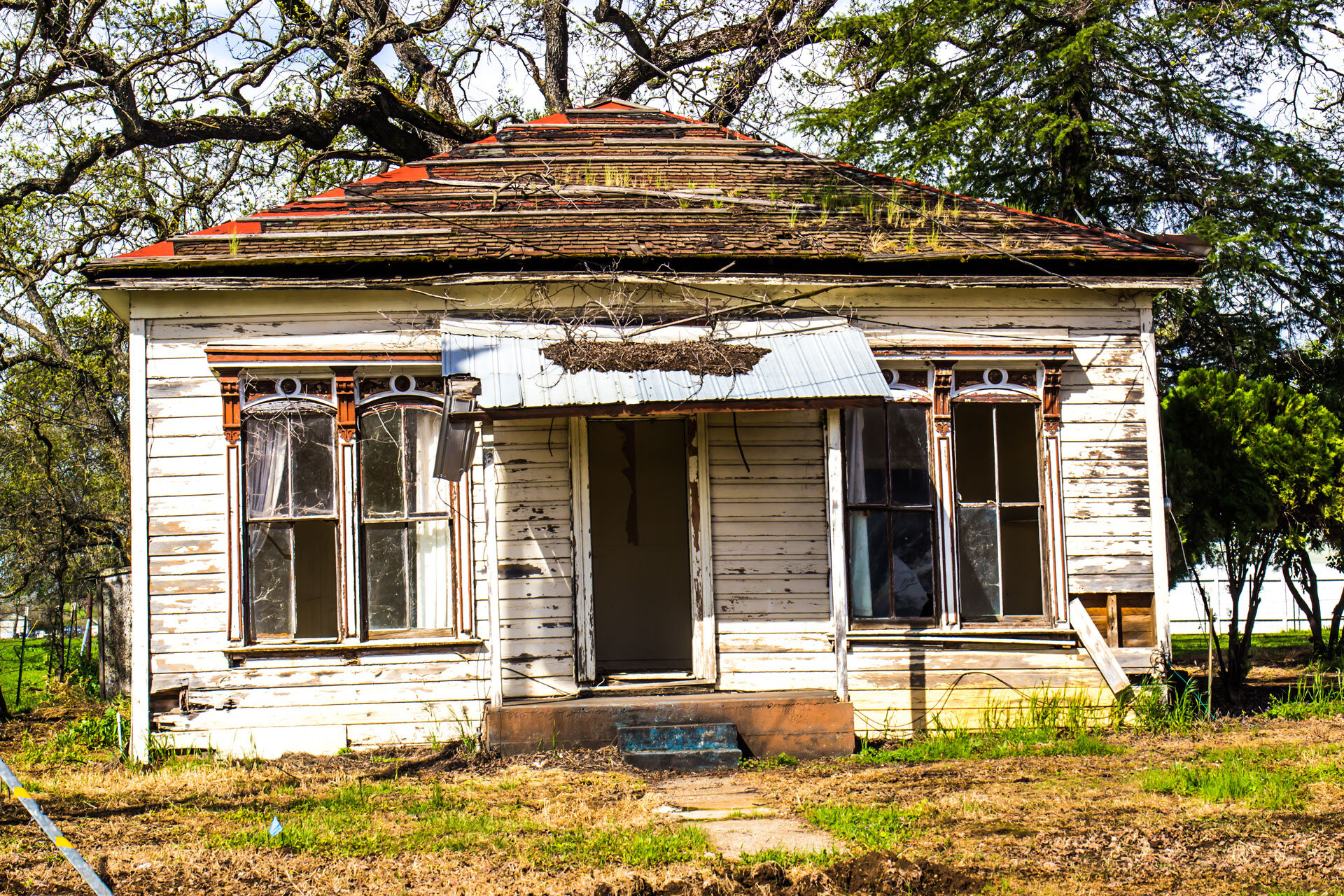
Yes — you can sell a condemned or red-tagged house in California. The process is different from a conventional sale, but it is absolutely possible, and California homeowners do it every year. A condemnation notice does not void your ownership rights or prevent a sale. What it does mean is that traditional buyers using bank financing will almost certainly walk away — lenders won’t finance a condemned property. Your realistic buyer pool is cash investors who specialize in distressed properties. Quick Home Offers® has been purchasing condemned properties throughout California since 2013.
What Are Condemned or Red-Tagged Properties in California?
A condemned or red-tagged property has been officially declared unsafe or uninhabitable by government authorities. This designation can result from various issues ranging from relatively minor problems like inadequate heating systems to more serious hazards such as structural instability, health concerns, or lack of essential utilities like running water. Regardless of the specific reason behind the condemnation, resolving these situations typically involves significant stress, substantial costs, and considerable time investment.
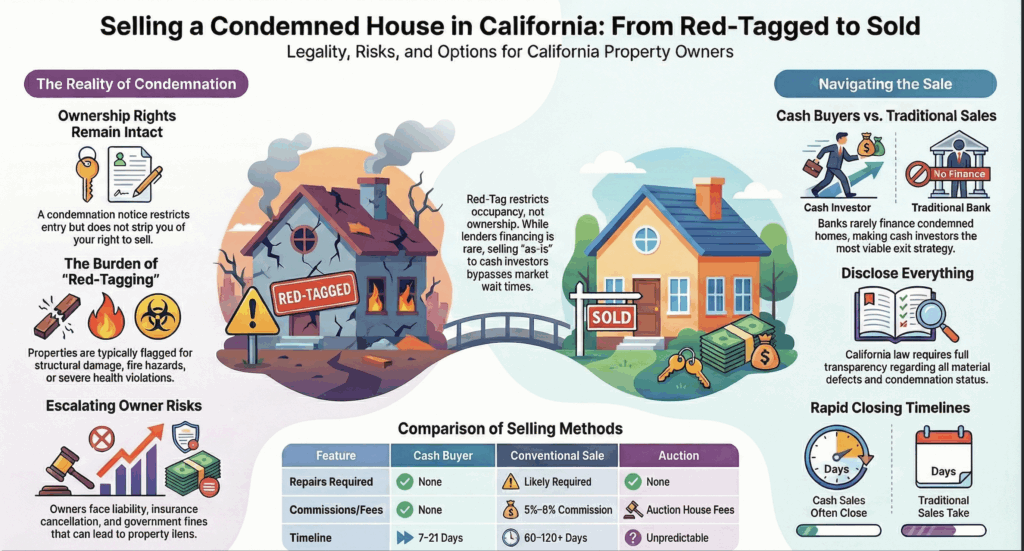
Frequently Asked Questions About Condemned or Red Tagged Properties
Q: Can you legally sell a condemned house in California?
A: Yes. A condemnation notice restricts occupancy but does not strip your ownership rights. You can sell a condemned property in California as-is to a cash buyer without making any repairs. The buyer takes on the property in its current condition and assumes responsibility for resolving the condemnation after closing.
Q: Will a bank finance a condemned house?
A: No. Conventional lenders — including FHA, VA, and most private mortgage lenders — will not finance a condemned property. This means your buyer must be a cash buyer. Real estate investors like Quick Home Offers® purchase with cash and are not subject to lender restrictions on property condition.
Q: What happens to the mortgage when a condemned house is sold?
A: The existing mortgage is usually paid off completely through escrow at closing – the same as any standard sale. You do NOT need to pay it off before selling a condemned house. If you owe more than the property is worth as-is, this is a separate conversation worth having directly with us. There may be options for you.
Q: Do I have to disclose the red-tagged or condemned status to a buyer?
A: Always. California law requires sellers to disclose known material facts that affect value or habitability. Even with cash buyers, you must always disclose. Quick Home Offers® can still purchase condemned homes, however these facts must always be disclosed.
Q: How do you determine your offer on a condemned property?
A: Every offer is crafted around your specific situation. The offer depends on the amount of work required to get the property habitable, the length of time it takes, the level of involvement with the city or county building jurisdiction, location, and the current occupancy status. We do NOT use algorithms or AI automation offers or valuations. You will get a direct and transparent conversation with Adam about how we arrived at your offer.
Q: How fast can you close on a condemned property?
A: Closing speed depends on the situation. We can only move as fast as the local building department allows, and every buyer will need some clarity on the property’s condemnation status and what it takes to cure the violations. That said, this does not always mean a long close. In many cases, the information is available online, and we can close in as little as 7 days. If the property has been formally red-tagged, plan for around 21 days.
Q: Can you buy a condemned house if it has liens?
A: Yes. Tax liens, judgment liens, and HOA liens do not prevent a sale. In most cases, liens are paid through escrow at closing. However, some condemned properties carry city or county-imposed liens that cannot be paid off until the violations are cured. In those situations, a buyer like Quick Home Offers® may hold back a portion of the proceeds in escrow until the lien is resolved, then return some or all of the withheld amount once the city or county releases it. We will walk you through exactly how this applies to your specific property.
Note: A lot of sellers with condemned properties are embarrassed or worried that they wasted their chance to sell. If you own a condemned property in California and want a straight answer from a real buyer, call us directly at (805) 870-5749 or submit your information in one of the forms. There is no obligation and no judgment — we have seen every situation imaginable since 2013.
Why Are Houses Red-Tagged?
Properties receive condemnation orders for numerous reasons. The most frequent causes include:

Health and safety violations
Properties with significant health and safety issues, such as extensive mold growth, asbestos contamination, or lead paint hazards, may face condemnation.

Structural damage
Homes suffering from severe structural issues, including collapsed roofs or compromised foundations, commonly receive condemnation notices.

Fire damage
Extensive fire damage that compromises the safety and integrity of the structure can lead to condemnation.

Abandoned or neglected
Properties left vacant and neglected for extended periods often develop safety and health hazards that result in condemnation.
What Constitutes A Red-Tagged House?
A condemned house has been officially declared unsafe or uninhabitable by local government authorities. To receive this designation, the property must present significant health and safety violations, structural deficiencies, or fire damage that render it dangerous for human occupancy.
Dangers of a Condemned House
Properties under condemnation present significant dangers to everyone involved. These hazardous structures often suffer from compromised foundations, toxic environmental hazards like mold and asbestos, and persistent pest problems. In CA, abandoned properties frequently become targets for trespassers and criminal activity, creating additional safety and security risks. These buildings have been declared uninhabitable for valid reasons, making them extremely challenging to sell through traditional channels. As the property owner, you face considerable liability exposure, including potential legal action, insurance policy cancellation, or the costly, time-consuming process of removing unauthorized occupants through the court system. Taking immediate action can shield you from further legal and financial consequences.
What Happens When A House Is Condemned?
When authorities condemn a property, they typically post an official notice declaring it unsafe for entry. The property owner receives notification with a specified timeframe to address the underlying issues. Failure to take appropriate action may result in legal proceedings to demolish the structure or the imposition of significant fines.
These financial penalties can accumulate rapidly, and local government agencies will place liens against your property to secure payment. These liens remain in effect until all issues are resolved and outstanding fines are paid in full. This creates serious title complications that further impede your ability to sell. Most traditional buyers and their lenders require liens to be cleared before closing. With most liens — tax liens, judgment liens, mechanic’s liens — Quick Home Offers® handles the payoff through escrow from your sale proceeds. Condemnation liens or code violation fines are different. They almost always follow the property and cannot be removed until the violations are physically cured. In those cases, we factor that into our offer and handle the remediation process after closing. Either way, you’re not stuck.
If you own a condemned property in California, taking immediate action is extremely important. Penalties and fines accumulate quickly, and government agencies will place liens against your property to secure payment. The sooner you act, the more options you have. Quick Home Offers® purchases condemned properties throughout California regardless of severity — call (805) 870-5749 for a direct conversation with no obligation.
Options for Selling a Condemned House in California
When facing the sale of a condemned property, your biggest challenge is finding a willing buyer. Most conventional buyers and lenders will not touch a condemned property, which significantly narrows your options. That said, several viable paths exist depending on the severity of the condemnation and your timeline.
- Sell With a Real Estate Agent Hiring an agent is a legitimate option, but it comes with important caveats. If the property cannot qualify for conventional financing — which most condemned properties cannot — your agent will be marketing exclusively to cash buyers anyway. In many cases, agents handling condemned properties end up contacting investors like Quick Home Offers® directly to get the deal done. If that’s the likely outcome, selling directly to a cash buyer eliminates the commission and gets you to the same place faster.
- Sell Directly to a Cash Buyer This is the most straightforward path for most condemned properties in California. Cash buyers like Quick Home Offers® purchase distressed properties directly, without requiring repairs, inspections, or agent involvement. While the offer will reflect the property’s condition, the financial equation often balances out when you factor in what you’re not paying — no commissions, no repairs, no carrying costs while the property sits on the market. The process is fast, transparent, and requires minimal effort on your part.
- Sell at Auction Property auctions can attract investors and cash buyers looking for value opportunities. However, auction prices for condemned properties typically fall below what you could achieve through a direct sale to an experienced investor, and the outcome is unpredictable. This option is generally worth considering only if other paths have been exhausted.
Which Selling Option Is Right for You?
| Cash Buyer | Conventional Sale | Auction | |
|---|---|---|---|
| Repairs Required | None | Likely required | None |
| Commissions / Fees | None — we pay escrow | 5–6% agent commission | Auction house fees apply |
| Close Timeline | 7–21 days | 60–120+ days | Unpredictable |
| Condemned Property OK | Yes — all severities | Rarely — most agents can’t find financing | Sometimes |
| Financing Required | No — cash purchase | Maybe | No |
Get An Offer Today, Sell In A Matter Of Days…
"*" indicates required fields
Can a Condemned House Be Fixed?
If you’re dealing with a condemned property in California, you may be questioning whether rehabilitation is possible or practical. The feasibility of restoring your property to a habitable condition depends primarily on the extent of the damage and the specific condemnation reasons. Let’s explore several viable options for your condemned property…
Steps to Selling a Condemned or Red-Tagged House
Successfully selling a condemned property in California requires navigating several important steps. The process is more complex than a conventional sale, but with the right approach, it is entirely manageable.
Step 1 — Get a Professional Inspection Before doing anything else, commission a comprehensive professional inspection. This identifies all safety concerns and deficiencies that triggered the condemnation, any additional issues that need to be addressed, and provides a realistic picture of renovation costs, which will directly impact your decision on how to sell.
Step 2 — Understand What Needs to Be Fixed The type of condemnation determines what repairs are required. The three most common categories are:
- Health and safety violations — mold, asbestos, and lead paint must be addressed by licensed and certified contractors. Attempting hazardous material removal without proper licensing creates additional legal liability.
- Structural damage — collapsed roofing, compromised foundations, or severe deterioration requires a licensed structural engineer to evaluate and scope repairs before any contractors begin work.
- Fire damage — requires replacing damaged drywall, electrical systems, plumbing, and structural components. Contact your insurance provider as early as possible to determine what may be covered and avoid any coverage complications.
Step 3 — Establish Value Once you understand the full scope of the problem, get a realistic sense of what the property is worth in its current condition and what it could be worth after repairs. A qualified appraiser who specializes in distressed properties is your best option. Online valuation tools are typically wildly inaccurate in cases of homes that need repairs or are condemned. It’s best to look for other homes in comparable condition.
Step 4 — Disclose Everything California law requires full disclosure of the condemnation status and all known material defects to any prospective buyer. This is not optional. Failure to disclose creates serious legal liability that follows you after the sale closes. Full transparency also builds credibility with cash buyers and investors who already expect complications and are specifically looking for properties like yours.
Step 5 — Choose Your Selling Path With a clear picture of the property’s condition, value, and your timeline, you can now evaluate your options:
- Repair and sell conventionally — the highest potential sale price, but requires significant upfront capital, time, and contractor management before the property can be listed. If you have the time, cash, and know-how, this is your best option to maximize sales price.
- List as-is on the open market — attracts investors and cash buyers. Remember, you will be hiring an agent to find a cash buyer for you. Before you hire an agent, know the value and ask for a net sheet so you can see how much you’ll net.
- Sell directly to a cash buyer — fastest and easiest method, no repairs required, no agent commissions, close in as little as 7 to 21 days. In cases of condemned homes, sellers may come out ahead with a cash buyer as the conventional route involves agent commissions and closing costs.
- Work with an agent experienced in distressed properties — can help navigate legal and financial complexities and connect you with buyers willing to take on rehabilitation projects.
- Demolition and land sale — when structural damage is severe, demolishing the condemned structure and selling the cleared lot may be more economically viable than attempting rehabilitation
For most condemned properties in California, repair costs make a conventional sale impractical. Selling directly to a cash investor is typically the fastest and most financially straightforward option, particularly when the property has multiple issues or the owner needs to move quickly.
Other Options To Sell A Condemned Property
Another potential avenue worth exploring is selling your property to local government agencies or non-profit organizations. These entities sometimes purchase condemned properties for affordable housing initiatives or community development projects. However, be prepared for a potentially lengthy and administratively complex process if pursuing this options.
If selling to a government agency or nonprofit is something you want to explore, be prepared for a lengthy process with no guaranteed outcome. For most condemned property owners in California, a direct cash sale remains the fastest and most certain path forward. Call (805) 870-5749 to talk through your options with no obligation.
How Quick Home Offers® Can Help
Quick Home Offers® is owned and operated by Adam and Josh Justiniano, who have purchased over 300 properties throughout California since 2013. We are not a hedge fund, an algorithm, or a national call center — when you contact us, you speak directly with Adam or Josh.
We purchase condemned properties regardless of severity. Red-tagged, posted with a notice of intent to demolish, partially burned, structurally compromised — we have seen it all, and we buy it all. Here is what working with us looks like:
- No repairs required. We buy the property exactly as it sits, condemnation notice and all.
- No fees or commissions. We are not real estate agents. We pay our own escrow fees.
- Fast close. We can close in as little as 7 days once we are in agreement — no bank financing delays.
- Liens are handled. In nearly all cases, existing liens are paid through escrow at closing.
- Honest offer. Every offer is personally evaluated by Adam or Josh based on your specific property — not generated by an algorithm.
If you own a condemned or red-tagged property in California and want a straight answer from a real buyer, call us directly at (805) 870-5749 or submit your address below.
Get An Offer Today
"*" indicates required fields