
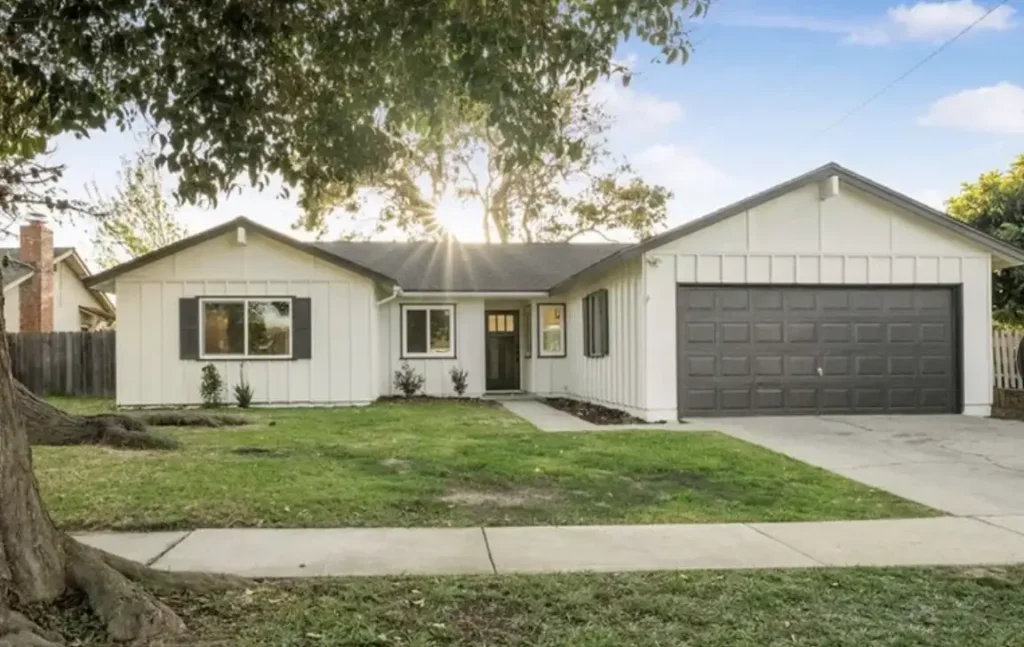
We Buy Fire Damaged Homes, Burned Structures, and Cleared Lots in California
Quick Home Offers® has closed over 300 properties across California since 2013, including burned structures and total losses. No repairs, no cleanup, no permits, no agent fees. We handle the demolition, the asbestos survey, and the debris — you don’t. Every offer is personally evaluated by our founders, Adam and Josh Justiniano, not generated by an algorithm.
How to Sell a Fire Damaged House in California
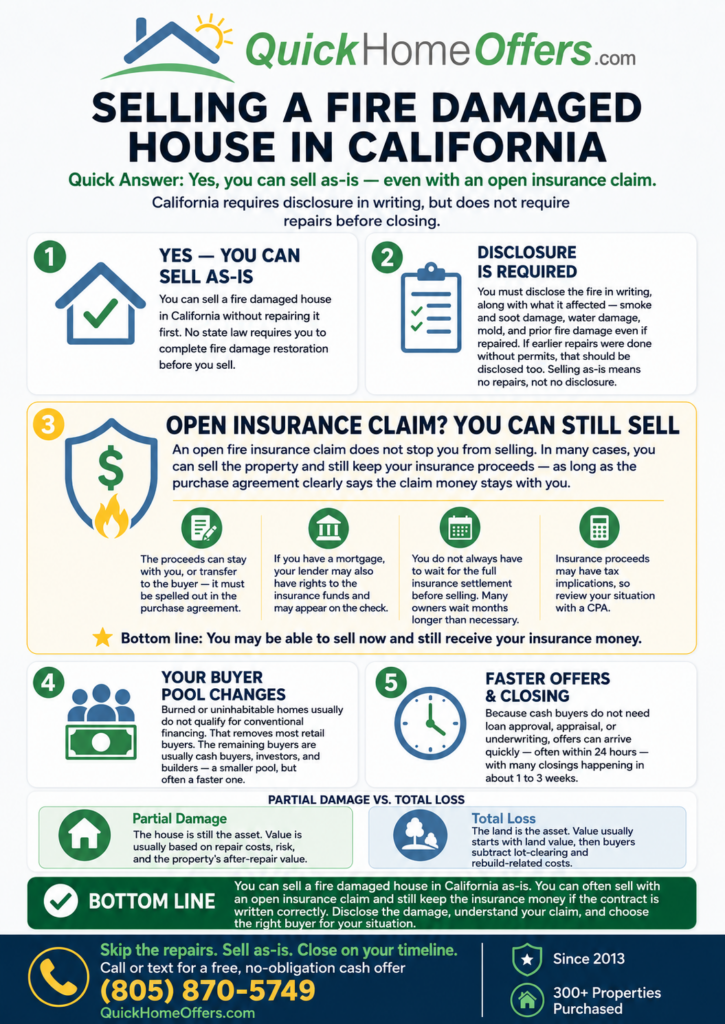
You can sell a fire damaged house in California as-is, without repairing it and without waiting for restoration to finish, by contacting a cash home buyer like Quick Home Offers®. State law requires you to disclose the fire and what it affected. It does not require you to fix anything first.
What changes the transaction isn’t the fire. It’s whether your insurance claim is still open, and whether what’s left standing is worth more than the ground it sits on.
Quick Home Offers® has purchased California property in every condition since 2013, more than 300 purchases, every one needing work. That includes burned structures. Two were total losses where the structure had to come down before anything could be built.
Quick Answer: Selling a Fire Damaged House in California
Yes, you can sell a fire damaged house in California, and you do not have to repair it first. No state law prevents the sale, and nothing requires you to complete fire damage restoration before closing. California does require disclosure in writing — not just the fire, but smoke and soot damage, water damage from putting it out, mold that followed, and previous fire damage even if already repaired. If prior repairs were done without permits, that gets disclosed too. Selling as-is means you won’t be making repairs. It does not mean you can stay quiet about what happened.
Your buyer pool is the first thing that changes. Conventional lenders won’t finance a structure that isn’t habitable, which removes most retail buyers. What’s left are cash buyers, real estate investors seeking renovation opportunities, and builders. Smaller market, faster process — loan approval, appraisal, and underwriting disappear, and most cash offers arrive within 24 hours with closing in one to three weeks.
An open fire insurance claim controls your timeline. Claim proceeds either stay with you or transfer to the buyer, and that has to be settled in the purchase agreement before escrow can function. If you have a mortgage, your lender’s name appears on the insurance check and the lender has rights to those funds. Sellers who assume they must wait for a full settlement often wait months longer than the sale requires.
Partial damage and total loss are two different sales. With partial damage the house is still the asset, and the question is estimated repair costs against sale price. Smoke, soot, and water reach electrical systems, wall cavities, and subfloor, which is why the visible burn area is rarely the full scope. With a total loss the land is the asset, and a buyer’s math starts with what it costs to clear the lot.
What this guide covers. What your property is worth after a house fire, what it costs to clear a burned lot and how the rules change by county, how an open claim and the California FAIR Plan affect your sale, the deadlines running against you, and an honest comparison of repairing and listing with a real estate agent, rebuilding, or selling as-is for cash.

What Your Fire Damaged Property Is Actually Worth
There’s no single answer, and any buyer who gives you one before seeing the property is guessing. One question decides everything: is the house still the asset, or is the land?
Partial Damage: Fire Damage Restoration vs. Selling As-Is
With partial damage the structure survives. Foundation, framing, and footprint are intact, and the work is mostly predictable. The math is pre-fire value, minus estimated repair costs, minus the risk and time the buyer takes on.
That last part is where sellers and buyers disagree most. A fire damage restoration estimate is not a fixed price. Damage hides behind drywall and above ceilings, and scope grows once demolition starts. Deducting repair costs from pre-fire value gets you a rough number, but a buyer prices the uncertainty too, because they eat it when the restoration process uncovers more than the estimate showed.
Two things move the number most: whether the fire reached the roof structure, and whether it reached the electrical. Contained damage to one room is manageable. Fire that traveled into the attic or through the wiring means the systems come out, and you’re into extensive repairs that reset the calculation.
Smoke Damage vs. Structural Damage
Structural damage is visible and quantifiable. An engineer or contractor can assess what’s compromised and estimate replacement.
Smoke is harder. It migrates into wall cavities, ductwork, insulation, and subfloor. Soot is corrosive and damages electrical components that look untouched. Water used to fight the fire soaks into framing and flooring, and if the structure sat wet, mold follows — its own disclosure item and its own remediation cost on top of the fire.
This is why a house that “only had a small fire” can still be a major project. A buyer experienced with fire damaged properties prices for what’s behind the walls, not what’s in the photographs.
Total Loss: The Land Is the Asset
When the structure is unsalvageable, nobody is valuing the house. The buyer is purchasing a lot — its location, its zoning, and what can legally be built on it.
Your property still has real value. It just isn’t measured against what the house was worth before the fire, and comparable sales of intact homes on your street aren’t the right comparison anymore.
A buyer’s math starts from land value and subtracts what it takes to get the site permit-ready. That subtraction is larger than most sellers expect, and it’s the single biggest reason offers on total-loss properties come in below what owners anticipate.
Why No Bank Will Finance a Burned House
A mortgage lender isn’t buying your house. They’re securing a loan against it, and that requires the property to be habitable on the day of closing.
Every appraisal assigns a condition rating. Fire damage severe enough to affect habitability, safety, or structural soundness lands at the bottom of that scale, which stops most conventional loans before underwriting starts. Government-backed financing is stricter. FHA loans follow HUD Handbook 4000.1 and its Minimum Property Requirements for safety, security, and structural soundness. VA loans apply a parallel standard under VA Pamphlet 26-7. A burned structure often fails several conditions at once.
California adds a layer. Under the State Housing Law, Health and Safety Code section 17920.3 defines when a building is legally “substandard,” including structural hazards, hazardous wiring, and fire hazards. Only one qualifying condition is needed. This is the statute behind a red tag or condemnation, and it’s why a burned house becomes a code enforcement matter well before anyone talks about selling.
None of this is a judgment about your property. It’s a lending standard that applies to every uninhabitable structure in the state. Practically, your buyer pool shifts to cash — smaller, but considerably faster.
Selling a Fire Damaged Home and Not Sure Where To Start?
Get a free, no-obligation consultation on your best route to take. If that’s taking a different route than selling to us based on your situation, we will tell you directly.
Call or text us directly at (805) 870-5749
Who Actually Buys Fire Damaged Homes in California?
The cash buyer pool is smaller than the retail market but it isn’t thin, and the buyers in it want different things. That’s why two offers on the same burned house can be thousands apart for reasons unrelated to negotiation.
Cash home buyers. Purchase as-is, close on your timeline, absorb the repair or clearing costs. Quick Home Offers® is one of these, and we say so plainly — you’re reading a page written by a buyer.
Real estate investors looking for renovation projects. They want the structure to survive, and pay most when damage is contained to one area.
Builders and developers. On a total loss the structure is irrelevant. They’re buying the lot, the zoning, and the buildable envelope.
Neighboring owners and cash retail buyers. Neighbors show up on larger parcels; retail cash buyers only where damage is cosmetic.
Which one you get depends on whether your property is a renovation project or a lot. A renovation investor and a developer will look at the same house and reach completely different numbers.
Where We Buy Fire-Damaged Houses in California
We buy fire-damaged houses in every California market we serve, from partial smoke and soot damage to structures gutted down to the framing. Bakersfield and Lompoc are the two markets where we have taken burned houses all the way through a full rebuild. What changes from county to county is not whether we buy, but what it takes to close.
Who Buys Fire-Damaged Homes in Bakersfield and Kern County?
We buy fire-damaged houses in Bakersfield and across the Kern County valley floor, including the east side, Oildale, and the southwest. Kern is one of two markets where we have taken a burned house all the way through a full rebuild.
Two things we watch here: Kern is split between two air districts, so a house in Bakersfield or anywhere on the valley floor files its asbestos notification with the San Joaquin Valley Air Pollution Control District, while a house in the county’s desert and mountain communities files with Eastern Kern APCD instead, and the clock does not start until the right office has it.
The second is vacancy. A house that sits empty gets found by unhoused persons, and a found house with no power or gas may get warmed and cooked with an open flame. Many of the Bakersfield houses we’ve seen with fire damage have started like this.
Who Buys Fire-Damaged Homes in Lompoc, Santa Maria and Santa Barbara County?
We buy fire-damaged houses in Lompoc, Santa Maria, and Santa Barbara, and Santa Barbara County is the other market where we have rebuilt a burned house from the framing up.
The property in our case study sat gutted for years after the fire, not because of the fire but because the owner’s contractor stopped partway through the rebuild. Rebuilds stall for a few reasons, and the most common is scope creep. On that Lompoc house we found cracked drain lines once we started on the bathrooms, and the job grew from there on multiple fronts. The rest is usually a disagreement with the insurance company, a disagreement with the contractor, or both, while the owner is still carrying the personal loss that started it.
A half-finished rebuild leaves a house no lender will finance and no insurer will write, with permits going stale while it sits, and whoever buys it next inherits the paperwork along with the framing. We buy at any point in that sequence, before the rebuild starts or halfway through it. For further detail on the process, see our case study.
Who Buys Fire-Damaged Homes in Ventura, Oxnard and Ventura County?
We buy fire-damaged houses in Ventura, Oxnard, Simi Valley, Thousand Oaks, Fillmore, Santa Paula, Westlake Village, and Oak Park. Ventura County is where we are based, live and grew up, so it is the market we know street by street.
Most of the fire damage we see here did not start in a kitchen. It came out of a declared wildfire, and that changes the sale. A declared disaster brings deadlines, tax basis protections, and rebuilding rules that a single-house fire does not, and those rules run on a clock that starts without anyone telling you. Read what changes when your fire was a declared disaster.
We buy burned houses, cleared lots, and properties still working through the claim, anywhere in the county.
Who Buys Fire-Damaged Homes in Riverside and Riverside County?
We buy fire-damaged houses in Riverside County. We have bought houses in Riverside County, though not yet one with fire damage, and we will say so rather than pretend otherwise.
What we do bring is a rebuild crew that has taken two burned houses from framing to finished, and underwriting that prices a burn honestly instead of discounting it for the unknown. If you have a fire-damaged house in Riverside County, we will look at it the same way we looked at the ones in Kern and Santa Barbara.
Who Buys Fire-Damaged Homes in San Diego County?
We buy fire-damaged houses across San Diego County. It is the furthest market we serve from our Ventura County office, and distance does not change the offer. We do not need to walk a burned house to price it, because the numbers that matter are the lot, the foundation, what the structure has left, and where the insurance claim stands. We have not yet rebuilt a fire-damaged house in San Diego County. We buy them at any stage, before demolition, after clearing, or mid-claim.
We buy fire-damaged houses throughout California, not only in the counties above. Across more than 300 properties since 2013, we have never turned down a house for the condition it was in. Call (805) 870-5749 and tell us where yours is.
Case Study: Fire Damaged Central Coast Home Bought As-Is for Cash
- Situation
- Fire damaged single-family home in Lompoc, sitting vacant for years
- Challenge
- Gutted to the framing, every major system gone, a stalled contractor rebuild, and squatters during the vacancy
- What we did
- Bought as-is for cash, then completed an 85% rebuild — roughly 75% new framing, new electrical, HVAC and ducting, new kitchen, all new drywall
- Outcome
- The owner walked away with no repairs, permits, or cleanup. We rebuilt and sold the finished home.
- Timeline
- About two weeks to close. Five months of rehab after that.
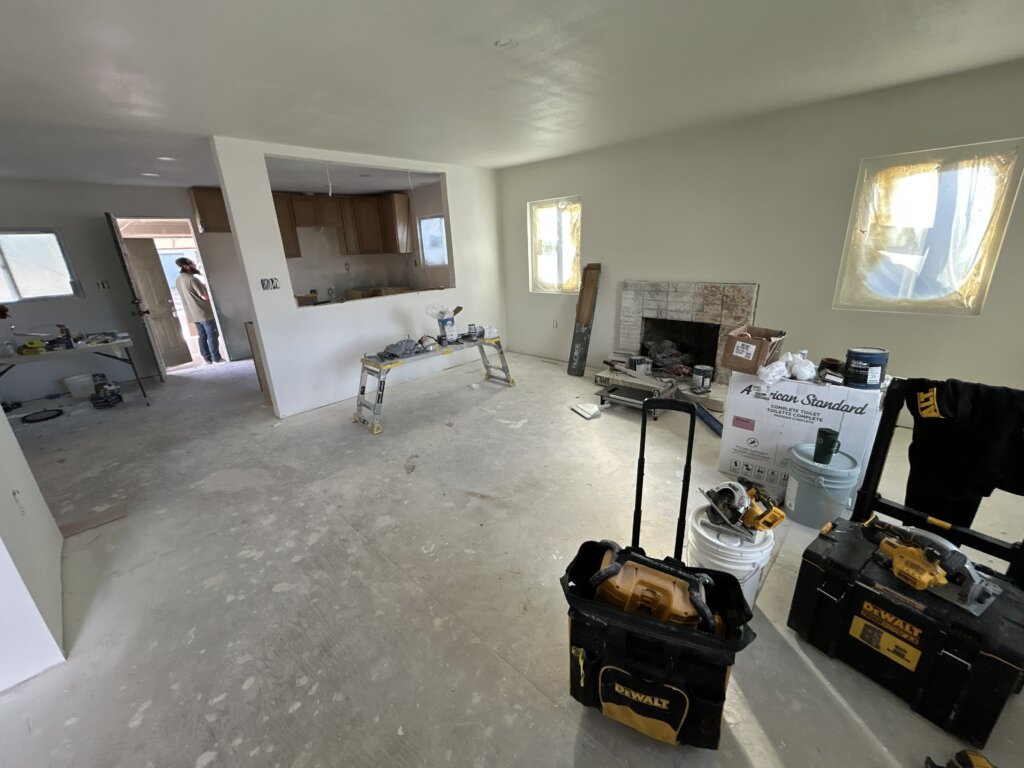
A Central Coast homeowner lost most of the home to a fire in 2021. After working through the insurance process, the owner hired a contractor to rebuild a few years later. The project stalled, and the house sat gutted to the studs. Squatters occupied the property during the vacancy, which the owner resolved before reaching out for a cash offer.
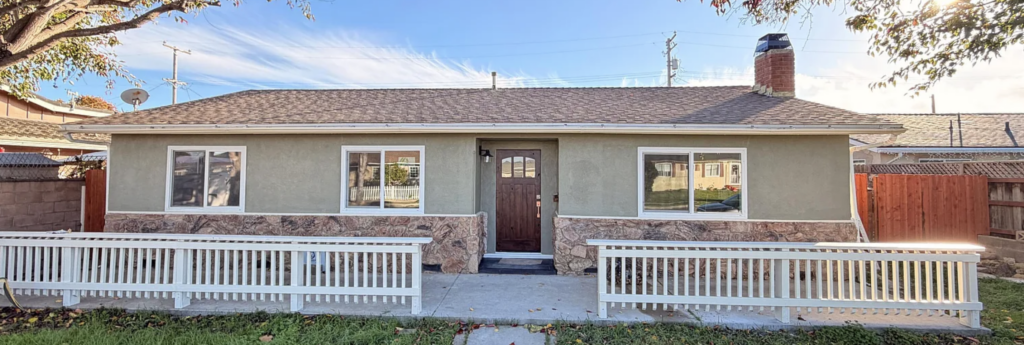
We bought it as-is and finished the rebuild — about 75% of the framing replaced, all electrical, new HVAC and ducting, a complete kitchen, 100% new drywall, appliances, lighting, and fixtures. By the end it was roughly 85% a new house on an existing footprint. That’s what a fire reaching the structure looks like once the walls come off, and no estimate written before demolition could have captured it. Treat a restoration estimate as a floor, not a price.
Compare the two timelines, because that’s the real choice. The owner closed in two weeks and was done. The rebuild took five months of permits, contractors, and capital — with a crew that does this regularly, on a project already partially demolished. A homeowner starting from a burned house and hiring out the work should expect considerably longer.
What Goes Into the Offer You Receive
Most cash buyers won’t show you this. We think you should see it, because an offer you don’t understand is an offer you can’t evaluate. Five things come out, not one.
The Five Factors Affecting Your Offer
- What the property will be worth when it’s finished. Not today’s value. On a total loss, land value once the lot is permit-ready. On partial damage, what the house sells for after restoration. Everything else subtracts from that number.
- The cost to get it there. Clearing the lot or completing repairs — $20,000 to $30,000 for a typical California teardown, more if testing comes back positive.
- Carrying costs while the work happens. Taxes, insurance, utilities, and financing run the entire time. Permits take two to six weeks, utility disconnects one to three. Nothing generates income during any of it.
- The risk that the site is worse than it looked. Asbestos nobody expected. A foundation that won’t come out clean. A building department that takes eight weeks instead of three. Contaminated soil trucked out and replaced with clean fill. Any buyer who has cleared more than a few lots has been surprised, and they price for it because they can’t price it away.
- A return that justifies doing it at all. We put capital at risk on a property with unknowns and carry it for months. That margin is what pays for item four when item four goes wrong.
Why Two Cash Offers Can Differ by Thousands
Different buyers solve different equations. A renovation investor calculates from after-repair value and needs the structure to survive. A builder calculates from land value and doesn’t care what’s standing. One subtracts repair costs, the other demolition.
Get more than one offer, and don’t assume the highest number is the best one. Ask for proof of funds, ask how they reached the number, and ask what happens if they find something unexpected after you’re in contract. A buyer who can’t explain their math, or who reduces the price late in escrow, is telling you something.
What It Takes to Clear a Burned Lot in California
Estimated Cost to Clear a Fire Damaged Residential Lot in California
| Line Item | Estimated Range | Notes |
|---|---|---|
| Demolition permit | $175–$450 | Varies by city and county. Some jurisdictions calculate the fee on project valuation. |
| Air district notification | $0–$225 | Some districts charge nothing for a residence of four units or fewer. Others charge a flat fee. |
| Certified Asbestos Consultant survey | $600–$1,500 | A general contractor cannot perform this. Many districts require it regardless of the building’s age. |
| Structure demolition and haul-off | $10,000–$18,000 | Equipment, labor, loading, debris hauling and disposal. Size, access, and hauling distance move this most. |
| Foundation and slab removal | $5,000–$10,000 | Assumes standard slab-on-grade. Raised foundations, basements, pools, and tight access cost more. |
| Site grading to permit-ready | $2,000–$5,000 | Backfilling, rough grading, leaving the lot level. Engineered fill or drainage work costs more. |
| Baseline total, testing negative | $18,000–$35,000 | Straightforward access, no unusual foundation or grading conditions. |
| Typical, standard single-family lot | $20,000–$30,000 | Our own underwriting range on California teardowns. |
| Add if asbestos or lead tests positive | Abatement + $3,000–$12,000+ | Hazardous-waste disposal premium. Different hauler, different landfill. |
If your structure is a total loss, someone pays to clear the lot before anything else happens. If you sell, that’s your buyer, and the cost is already inside their offer. If you rebuild, it’s you.
It’s the single largest reason offers on burned property land where they do — and most of what’s written about it online is either wrong or written for a wildfire disaster that may not describe your situation. Three separate sets of rules apply, and almost everyone collapses them into one.
Preliminary comparison figures. Actual cost depends on size, site access, foundation type, local disposal fees, testing results, and whether the debris is classified as hazardous waste. The two lines that move the total most are the ones nobody can quote until testing comes back — which is why a buyer prices for uncertainty.
Federal Rules: The Asbestos Exclusion for Small Residential Buildings
The federal rule is the Asbestos NESHAP, at 40 CFR Part 61, Subpart M. It contains an exclusion most people don’t expect: residential buildings with four or fewer dwelling units are excluded. EPA confirmed this in a 1995 Clarification of Intent, stating that demolition of an isolated small residential building, by any entity, is not covered.
So the blanket claims you’ll read — that California requires an asbestos survey on every fire damaged structure with no exceptions — are not accurate as a statement of federal law.
But the exclusion is narrower than it sounds, and in much of California it doesn’t apply at all. Air districts may write rules stricter than the federal standard, and the largest one does. South Coast AQMD, covering Los Angeles, Orange, Riverside, and San Bernardino counties, defines a residential structure as a regulated facility, requires a survey regardless of the building’s age, and states in the rule that a facility destroyed by fire, including any debris, remains subject to its provisions.
California Rules: The Requirement With No Residential Exclusion
This is the part almost nobody explains. California’s worker-safety regulation, Title 8, Section 1529, has no residential exclusion at all. It requires building owners to determine the presence, location, and quantity of asbestos-containing material before work begins, and presumes that thermal system insulation, sprayed or troweled surfacing materials, and asphalt or vinyl flooring in buildings built no later than 1980 contain asbestos until testing rebuts it.
The practical result: you can be fully exempt under the federal air rule and still need an asbestos survey in California. Cal/OSHA’s standard has no residential exclusion, so the federal exemption doesn’t reach you. Once a contractor disturbs the fire debris, they have two options — test the material for asbestos first, or legally treat every piece as if it already contains it. Testing is almost always cheaper, because assuming the worst means paying for full asbestos handling across the entire job.
Surveys must be performed by a Certified Asbestos Consultant. A general contractor isn’t qualified, and you can verify any license through the California Contractors State License Board. Separately, Health and Safety Code section 19827.5 bars any city or county from issuing a demolition permit without either the asbestos notification or a written declaration that notification doesn’t apply.
Local Rules: Your Air District Decides, Not the State
How California Air Districts Treat a Fire Damaged Home
| District | Rule | Single-Family Home | Fire-Specific Provision |
|---|---|---|---|
| Southern CaliforniaSouth Coast AQMDLA, Orange, Riverside, San Bernardino | Rule 1403 | Regulated. A residential structure is a facility. Survey required regardless of building age. Only an owner-occupant doing their own work is exempt. | Yes, explicitly. A facility destroyed by fire, including debris, remains subject. Fire-damaged material requires an approved Procedure 5 plan. |
| Southern CaliforniaSan Diego County APCD | Rule 1206 | Survey required regardless of the age of the facility before renovation or demolition. Limited exemption under 100 sq ft. | Not separately addressed. |
| Southern CaliforniaVentura County APCD | Rule 62.7 | Reaches operations not regulated under the federal standard. Owner-occupants doing their own work are exempt. | Not separately addressed. |
| Central CoastSanta Barbara County APCD | Rules 361.140–361.156 | Homes with four or fewer units are exempt from notification. | Yes. Demolishing a building by burning it down triggers the reporting requirements. |
| Central CoastSan Luis Obispo County APCD | Federal NESHAP | Single structures with four or fewer units are exempt. Regulated structures require a CAC survey with no year cutoff. | Not separately addressed. |
| Central ValleySan Joaquin Valley APCDFresno, western Kern, and six more | Rule 4002 | Residential exclusion applies only if every condition is met: one residence as originally built, never used commercially, no other habitable structure disturbed nearby. | Not separately addressed. |
| Central ValleySacramento Metro AQMD | Rule 902 | Facilities exclude residential buildings with four or fewer units. Single-family homes are generally not regulated. | Not separately addressed. |
| Bay AreaBay Area AQMDNine Bay Area counties | Reg. 11, Rule 2 | Every demolition must be reported, even with no asbestos present. Full survey waived under four units, but sampling required for HVAC, acoustic ceilings, textured walls, stucco, resilient flooring. | Yes. Intentional burning counts as demolition. Untested fire-damaged debris must be handled as asbestos-containing waste. |
Here is where most advice about selling a fire damaged house falls apart. People write as though California has one rule. It has roughly three dozen.
Asbestos requirements are enforced by your local air pollution control district, and those districts write their own rules. Some adopt the federal standard. Others go well beyond it. The difference determines whether you need a survey, what you file, what you pay, and in some counties whether your fire debris must be handled as hazardous waste.
Two examples show the gap. In South Coast AQMD a residential structure is a regulated facility, a survey is required regardless of age, and the rule states directly that a facility destroyed by fire remains subject. Roughly 150 miles up the coast in Santa Barbara County, a home with four or fewer units is exempt from notification entirely — unless the structure is demolished by burning, which triggers reporting anyway.
This is why a demolition quote given over the phone is almost meaningless. A contractor who hasn’t asked which air district you’re in hasn’t priced the job.
Always confirm the rules for your own property. California has roughly three dozen air districts and requirements differ significantly. This table covers several of the largest as examples and is not a complete list. Rules and fees change. Before accepting any demolition quote, contact your local building department and air district directly. The California Air Resources Board publishes a county-by-county list of which air district covers your property. Nothing here is legal advice.
Wildfire or House Fire? The Answer Changes Everything
Single-Structure Fire vs. Declared Wildfire in California
| Single-Structure Fire | Declared Wildfire Disaster | |
|---|---|---|
| Who pays to clear the lot | You, or your buyer | The state, if you enroll in Phase 2 before your county’s deadline |
| Typical clearing cost | $20,000–$30,000 | $0 enrolled. Roughly $115,000 average per property if you hire privately |
| Hazardous waste removal | No program exists. You arrange it and pay for it | Phase 1 is automatic on destroyed homes in the disaster area. No signup required |
| Soil testing | Not required to sell. A buyer planning to build will want it | Included in Phase 2, with confirmation testing before rebuild |
| Deadline to act | None — though carrying costs and code enforcement don’t wait | Right-of-Entry form, deadline set by your county. Miss it and you pay privately |
| Property tax relief | Section 170 reassessment, available in all 58 counties | Section 170, plus a five-year window under Section 69 to move your base year value |
| Permit fee waivers | Rarely offered | Common, but usually tied to the original owner-occupant and lost if you sell |
| Insurance for debris removal | Sits inside your dwelling limit. Only about 5% more is added once that limit is spent | Same 5% limit — which is why enrolling protects your proceeds for the rebuild |
Most of what’s written about selling a fire damaged house assumes a wildfire. That misleads people, because what determines your costs isn’t how the fire started. It’s whether a disaster was declared.
A vacant rental that burned after someone got inside, an electrical fault, a kitchen fire that got away — those are single-structure fires. No declaration, no state program, no free cleanup. A home destroyed in a declared wildfire is a different transaction, with different deadlines and a state program that may clear the lot at no cost.
Not sure which applies to you? Your county’s office of emergency services or building department can confirm whether your property sits inside a declared disaster area and whether a debris removal program is still open.
If Your Fire Wasn’t a Declared Disaster
There is no state cleanup coming. Every line in the clearing cost table above is yours to pay, or your buyer’s. No clock is running on a program either, which sounds like freedom and usually isn’t — taxes, insurance on a vacant burned structure, and code enforcement risk keep accruing while a decision waits.
If Your Home Was Lost in a Declared Wildfire
Enroll in the state debris removal program before your county’s deadline. This is the single most valuable thing you can do, and people miss it while dealing with everything else. Phase 1, run by the Department of Toxic Substances Control or US EPA, removes household hazardous waste automatically. Phase 2 removes structural debris, ash, concrete, and contaminated soil, and requires a Right-of-Entry form.
Enrolling doesn’t commit you to rebuilding. The lot gets cleared at no direct cost, your insurance proceeds stay available for the rebuild, and you can still sell afterward as a cleared, permit-ready lot.
Here’s the part most cash buyers won’t print. If you enroll on time, clearing costs you nothing — which erases the largest cost a buyer would otherwise price into an as-is offer. Selling a cleared lot after the program finishes will usually net you more than selling the burned lot before it.
Selling as-is still makes sense if you can’t wait two years, if the gap between coverage and rebuild cost is bigger than you can cover, if you’re out of state, or if you don’t want to manage a construction project. But if you want the most money and you have time, enroll first.
Deadlines That Affect What You Do Next
Fire damage triggers property tax provisions with real clocks on them.
Rebuilding Like-for-Like Protects Your Tax Basis
Under Revenue and Taxation Code section 70, reconstruction substantially equivalent to what stood before is not new construction, so it doesn’t trigger reassessment. Only the portion exceeding substantially equivalent gets a new base year value. For an owner holding a low Proposition 13 basis, that matters enormously.
Immediate Tax Relief Is Available in Every California County
Under Revenue and Taxation Code section 170, counties with a disaster relief ordinance can reduce your assessment as of the date of damage when the loss in market value is $10,000 or more. All 58 California counties have adopted one.
If your home was lost in one of the major 2024 or 2025 Southern California fires — including the Palisades, Eaton, Hurst, and Mountain fires — a 2025 amendment gives you 24 months to file, not the usual 12.
This isn’t limited to declared disasters. It applies to a disaster, misfortune, or calamity — and California case law defines misfortune or calamity as a sudden, unforeseeable event, which reaches an ordinary house fire. If your house burned and you’re still paying tax on the pre-fire assessed value, contact your county assessor. There is a filing deadline.
Declared Disasters Carry a Five-Year Clock
If the Governor declared a disaster, Revenue and Taxation Code section 69 lets the base year value transfer to a comparable replacement property in the same county — but only if acquired or newly constructed within five years of the disaster. That sounds generous. It isn’t, when clearing takes months, permitting takes longer, and rebuilds routinely run two to three years.
And this one cuts against selling. The relief goes to the owner of the damaged property. Sell the lot and you don’t take the transfer with you. If you hold a very low Proposition 13 basis and a declared disaster applies, that five-year window may be worth more than the difference between a cash offer and a retail sale.
None of this is tax advice. Confirm with your county assessor and a CPA before relying on any of it.
Your Options To Sell A Fire Damaged Property Compared
Four paths exist for a fire damaged property in California, and each wins for somebody. Compare them on net proceeds in your pocket on closing day — not the headline price, which hides commissions, repairs, and months of carrying costs.
Comparing Your Options After a House Fire in California
| Option | What You Pay Out of Pocket | Timeline | Who Carries the Risk | Best For |
|---|---|---|---|---|
| Repair and list with an agentPartial damage only | Repair costs upfront, plus agent commission and closing costs at the sale, plus holding costs throughout. | Restoration 3–9 months, then 30–60 days on market, then 30–45 days in escrow. | You. Scope grows once walls open. A financed buyer can still fall out. | A sound structure, contained damage, and the cash and patience to see it through. |
| Clear the lot and rebuildTotal loss | $20,000–$30,000 to clear, plus the full rebuild. Impact fees apply if you add square footage. Clearing can be free inside a declared disaster. | 4–10 weeks to clear, then 12–18 months to build. Two to three years is common after a major fire. | You. Rebuild costs can outrun coverage, and permit timelines aren’t yours to control. | A low Proposition 13 basis, adequate insurance, and time. |
| Sell as-is for cashAny condition | Nothing. No repairs, no cleanup, no agent commission, no lender fees, no appraisal, and we cover closing costs. | Offer within 24 hours. Closing in 7 to 30 days, on your schedule. | Us. Unexpected asbestos, a stubborn foundation, permit delays — all ours the day we close. | Out-of-state owners, inherited property, and anyone who wants it finished. |
| Do nothing for nowThe default, and rarely the plan | Property taxes and insurance continue. Coverage on a vacant burned structure is difficult and expensive to keep. | Open-ended. | You, and it compounds. Code enforcement, red tag, abatement liens, squatters, and elevated risk of a second fire. | Almost nobody — but it’s what happens while a decision gets postponed. |
Compare on net proceeds at closing, not on sale price. A listing at a higher number can net less than a cash offer once commission, repairs, and six months of carrying costs come out — and it can also net more. Run your own numbers on all four.
The Option Most Sellers Land On Without Choosing It
Doing nothing is the option nobody selects and many people end up in. A burned structure sitting vacant doesn’t hold still. Insurance gets harder to keep and more expensive. Code enforcement can red tag the property and, if the city abates it, attach the cost as a lien. Vacant burned houses attract people looking for shelter, which raises the odds of a second fire on the same lot.
If you’re not ready to decide, that’s fair. Just make it a decision with a date on it rather than something that happens by default.
What You Must Disclose When Selling a Fire Damaged House in California
California requires you to disclose the fire on the property regardless if it’s been remediated and repaired or not. Three disclosures apply regardless of which selling path you choose.
The Fire Is a Material Fact, Even If You Repaired It
Fire damage is a known material fact. You must report it on the Transfer Disclosure Statement (Civil Code §1102.6), and repairing the damage does not erase the duty to disclose it.
Fire Hazard Zone Disclosure (NHD)
If the property is in a designated fire hazard severity zone, disclose that on the Natural Hazard Disclosure Statement (Civil Code §1103.2). Confirm your parcel’s zone on CAL FIRE’s OSFM map.
AB 38 Home-Hardening Documentation (High and Very High Zones)
AB 38 is a disclosure law, not a repair mandate. If the property is in a High or Very High Fire Hazard Severity Zone and the home was built before January 1, 2010, your disclosure notice to the buyer must include three things (Civil Code §1102.6f): the statutory statement that the home is in a high-risk zone and predates Wildland-Urban Interface building codes; as of July 1, 2025, a list of low-cost retrofits marked to show which you completed while you owned the home; and a list of vulnerability features — oversized or unscreened eave and roof vents, untreated wood-shingle roofs, combustible landscaping within five feet of the house, single-pane windows — marked to show which exist that you’re aware of. Your county may also require proof of defensible-space compliance before escrow closes.
You disclose these conditions; you never have to fix them. On a total loss there’s no structure left to inspect, so the retrofit and features lists fall away — but the zone disclosure on the NHD still applies to the bare land. Because this is disclosure and not remediation, a cash buyer takes the property, and the zone, exactly as it sits.
Selling While Your Insurance Claim Is Open
An open fire insurance claim doesn’t stop you from selling. It changes how the sale is structured, and it’s the most common reason sellers wait months longer than they need to.
Who Keeps the Insurance Proceeds When Selling
The claim belongs to you as the policyholder. When you sell, the proceeds either stay with you or transfer to the buyer, and that has to be in the purchase agreement before escrow can function.
You keep the proceeds and the sale price reflects it. More common when the claim is close to settled or already paid.
You assign the proceeds to the buyer. The buyer takes over the claim, and the sale price is higher to account for it. More common when damage is significant and the buyer will manage repairs.
Neither is automatically better. What matters is that it’s decided in writing before you’re in contract, because an unresolved claim is one of the most common reasons a fire damaged sale falls apart late.
Your Lender Has Rights to That Check
If there’s a mortgage, your lender’s name appears on the insurance check alongside yours. The lender has rights to those funds up to the loan balance, and typically releases money in stages tied to documented repairs. Sellers who assume they can direct the settlement freely often find the lender has a firm view. Call your servicer early.
Actual Cash Value vs. Replacement Cost
This decides whether an open claim is worth waiting for, and most people never have it explained.
Actual cash value pays the depreciated value of what was damaged at the moment of loss. A twenty-five-year-old roof is paid as a twenty-five-year-old roof. Replacement cost pays what it costs to replace today, but carriers typically pay actual cash value first and release the difference only after repairs are documented and complete.
If you don’t intend to rebuild, the replacement cost portion may never reach you. A seller waiting on a “full settlement” that structurally requires completed construction is waiting for something that isn’t coming. Read the declarations page and ask the insurance company what has been paid and what is being held.
Case Study: When a Sale Falls Apart Mid-Claim
We were in escrow on a Bakersfield property when the house caught fire before closing. Insurance entered the picture, the numbers changed, and the seller decided they had the funds to restore it rather than sell. We would have moved forward. They cancelled, and that was their right.
Sometimes the right answer is to keep the property, and any buyer who says otherwise is selling you something. You don’t have to wait for a claim to settle before you sell — you do have to decide who keeps the proceeds, confirm what your lender requires, and understand whether the money you’re waiting on will arrive at all if you don’t rebuild.
The California FAIR Plan and Your Sale
If you couldn’t get private fire insurance and ended up on the California FAIR Plan, your claim works differently from a standard policy — and the differences matter most on exactly the kind of loss you’ve had.
The FAIR Plan is California’s insurer of last resort, for owners in high fire risk areas who can’t find coverage on the open market. It was never designed to be comprehensive. It was designed to be available.
What the FAIR Plan Doesn’t Cover
There is no Ordinance or Law coverage which is what pays the difference when current building codes require more than what was there before. After a California fire, that gap is rarely small — fire-resistant construction, updated electrical and plumbing standards, and sprinkler requirements add substantially to a rebuild, and a basic FAIR Plan policy funds none of it.
Debris removal coverage is limited. On a total loss, clearing the lot is one of your largest expenses, and the FAIR Plan provides less for it than most standard policies. That’s why many policyholders carry a separate Difference in Conditions policy alongside it. If you have one, read it.
What This Means If You’re Selling
A FAIR Plan policyholder often ends up with less money than the rebuild costs and less help clearing the lot. That doesn’t change whether you can sell. It changes the math on whether rebuilding makes sense.
Ask your broker for written confirmation of your debris removal limit, whether you have Ordinance or Law coverage, and whether a Difference in Conditions policy is in place. Then compare your dwelling limit against a current local rebuild estimate. The California Department of Insurance publishes a fact sheet on debris removal coverage. Your policy terminates at close of escrow, and the coverage doesn’t transfer to the buyer.
Frequently Asked Questions About Selling A Fire Damaged Property In California
How much does a fire damaged house sell for?
It depends on whether the house is still the asset or the land is. With partial damage, the number starts from pre-fire market value and subtracts repair costs plus the buyer’s risk. With a total loss, it starts from land value and subtracts clearing costs — typically $20,000 to $30,000 in California. Anyone quoting a single percentage discount without seeing the property is guessing.
Can I sell a house with an open fire insurance claim?
Yes. The proceeds either stay with you or transfer to the buyer, and that must be settled in the purchase agreement before escrow opens. If you have a mortgage, your lender has rights to those funds. You do not have to wait for a full settlement to sell.
Do I have to clear the lot before selling?
No. A cash buyer purchases as-is and handles clearing. If your property is in a declared wildfire disaster area, enrolling in the state debris removal program before your county’s deadline can clear it at no cost — and selling a cleared lot afterward often nets more than selling the burned one now.
Do I have to disclose a fire that was already repaired?
Yes. Previous fire damage remains a material fact after the drywall goes back up. If the repairs were done without permits, that gets disclosed as well.
What if the property was red tagged?
A red tag doesn’t prevent a sale. It narrows your buyer pool and starts a clock — if the city abates the property, the cost can attach as a lien. We buy red tagged and condemned property in California.
Will a cash buyer pay less than a retail sale?
Usually, on headline price. Compare net proceeds at closing instead: no agent commission, no repairs, no lender fees, no appraisal, no holding costs, and we cover closing costs. Sometimes the gap is smaller than it looks. Sometimes listing is genuinely better. Run both.
Get a Cash Offer on Your Fire Damaged House
We’ve bought California property in every condition since 2013 — more than 300 purchases, all needing work. Burned structures included. Tell us what happened and we’ll give you a straight answer, even if that answer is that selling isn’t your best move.
- Call or fill out the form. Basic details about the property and the fire.
- We look at it. In person or from photos, depending on condition.
- You get a written offer. Usually within 24 hours, with the reasoning behind the number.
- You decide. Close in as little as seven days, or take your time. No obligation.
Call or text (805) 870-5749
We’ll Call You Within 1 Business Day
Enter your number. We’ll walk through your options — whether you sell to us or not. No fees. No obligation. Serving California since 2013.